Cultivate Well-Being: How Chiropractic Care Prepares You for Spring Gardening

As spring unfurls its green fingers across landscapes, gardening enthusiasts and novices alike feel a familiar pull towards the earth—a desire to plant, prune, and beautify their surroundings. However, before you grab your tools and head out into the garden, it’s essential to prepare not just your soil, but your body too. Gardening, as rewarding as it is, can be physically demanding, and without proper preparation, can lead to strain and injury. This is where chiropractic care steps in, offering a holistic approach to get you into prime gardening shape.

The Groundwork: Understanding the Gardener’s Plight

Gardening involves a variety of activities that require strength, flexibility, and endurance. From bending over flower beds to lifting heavy bags of mulch, these repetitive motions can take a toll on your body, especially if it’s not conditioned for such tasks. The result? Stiffness, sore muscles, and potentially, more serious musculoskeletal issues.

Chiropractic Care: Nurturing the Gardener’s Body

Chiropractic care focuses on the diagnosis, treatment, and prevention of mechanical disorders of the musculoskeletal system, especially the spine. For gardeners, chiropractors can offer tailored care that addresses specific challenges posed by gardening, ensuring that your body is as ready for spring as your garden.

1. Alignment for Endurance: Regular chiropractic adjustments ensure that your spine and joints are aligned, reducing the strain placed on your body by gardening tasks. Proper alignment enhances your overall physical performance, allowing you to garden longer with less fatigue.

2. Flexibility for Fluidity: Chiropractors can recommend stretches and exercises that improve your flexibility, crucial for the wide range of movements gardening requires. This not only helps prevent injuries but also makes it easier for you to reach, bend, and kneel, ensuring a more enjoyable gardening experience.

3. Strength for Stability: Alongside adjustments and flexibility exercises, chiropractic care often incorporates strength training tailored to your needs. Strengthening the core and back muscles, in particular, supports proper posture during gardening, protecting you against strains and sprains.

4. Recovery for Resilience: After a long day in the garden, chiropractic treatments can aid in quicker recovery by improving blood circulation and reducing inflammation. This means you’ll be ready to get back to your garden sooner, with less soreness and a lower risk of injury.

5. Education for Prevention: Chiropractors can provide valuable advice on ergonomics, teaching you how to use your body efficiently while gardening. This includes the right way to lift heavy objects, the importance of taking frequent breaks, and the benefits of using tools that reduce strain.

Planting the Seed: Starting Your Chiropractic Journey

Before you dive into your gardening projects this spring, consider scheduling a visit with a chiropractor. They can assess your physical readiness for gardening and create a personalized care plan to enhance your strength, flexibility, and endurance. This proactive approach not only prepares you for a successful gardening season but also promotes long-term health and well-being.

Conclusion: Growing Health Alongside Your Garden

Gardening is a labor of love, a physical expression of creativity and care. By incorporating chiropractic care into your preparation for spring gardening, you’re not just nurturing your garden but also cultivating your own well-being. As you sow and tend to your garden this spring, remember that your health is the most vital soil from which beauty and vitality can bloom.


This blog post emphasizes the benefits of chiropractic care in preparing the body for the physical demands of gardening, ensuring a healthier and more enjoyable experience. Happy gardening!

Tagged with: , , , , ,
Posted in Uncategorized

7 Ways to Have a Happy (and Safe) Halloween During COVID-19

So many of us have been anticipating October. Right about this time, there begins to be a bit of a nip in the air. The leaves begin to fall. And we dust off those bins of decorations and start adorning our front doors with foliage, gourds and ghouls.

Yes, it’s fall time, which means Halloween is just around the corner. But one thing is a little different this year. Yep, that’s right. COVID-19. Halloween is a great time for tricks and treats, but it’s not for getting COVID-19. Activities typically associated with Halloween are now considered high risk.

“As we now do in our new normal, it’s important to assess your personal risk when deciding to participate in any holiday festivities this season,” said Brandie Beuthin, RN, an infection prevention director at Banner – University Medical Center Tucson. “Make sure to check how widespread infection is in your area in addition to limiting prolonged time in close contact with others.”

While some parents are making alternative plans and getting creative, others may be conflicted on what to do. Here are some creative ways to keep the “tricks and treats” in Halloween but also ensure you and your family are smart and safe this year.

1. Contact-Free Scavenger Hunts

Set up a socially distanced scavenger hunt around your neighborhood to look for Halloween-themed items on a list. Give prizes away for items found. If you want to stay close to home, consider a hunt-style trick-or-treat and hide candy and items around the house and yard.

2. Pumpkin Carving Contests

Do you have some artists in the family? Consider carving and/or decorating pumpkins with members of your family. If you are able to maintain a safe distance outdoors, invite some neighbors and friends to carve and/or decorate. Just remember safety first when it comes to carving—especially with little ones.

3. Neighborhood Decorating Contest

Do you have a Griswold in your neighborhood? Why not amp up the Halloween spirit with a neighborhood decorating contest? Set up rules and a virtual voting committee and let the creativity fly. Then neighbors can walk outdoors admiring decorations from a distance.

4. Bring on the Boos

Have you been Booed? Do reverse trick-or-treating by dropping off small gift bags of candy on the porches of your neighbors and friends.

5. Neighborhood Car Parade

Bring the spirit of Mardi Gras parades to Halloween. Organize a socially distanced neighborhood car parade and give out treat bags or toss candy as kids and parents wait out front of their homes. Just remember to wear your cloth mask and wash hands thoroughly before and after tossing candy. Check out more tips in the Do’s and Don’ts below.

A few moderate-risk activities

6. Outdoor Costume Party

If you are able to maintain more than six feet apart, host a costume party outdoors with a few families and friends. Remember to wear a cloth mask if you are unable to maintain social distancing outside. Lower your risk by following the Centers for Disease Control and Prevention’s recommendation on hosting gatherings or cook-outs.

7. One-Way Trick-or-Treating

Put together individually wrapped goodies and set them on a table outside of your home for families to grab and go while maintaining social distancing. If you prepare goodie bags, remember to wash your hands with soap and water for at least 20 seconds before and after preparing the bags.

Important Do’s and Don’ts to Remember

  • Do wear a mask to keep your nose and mouth covered in public places and when social distancing can’t be maintained.
  • Don’t use costumed masks in place of cloth masks or wear both. Wearing both is dangerous if the costume masks makes it hard to breathe. Save some money and consider a Halloween-themed cloth masks. There are plenty of creative do-it-yourself tips online.
  • Do wash your hands often with soap and water for at least 20 seconds and sanitize high-touch areas.
  • Don’t wear costumes with gloves. They’ll protect your hands, but if you touch your eyes, nose or mouth and then go ahead and touch something else, it can increase the risk for spreading the virus.
  • Do keep hand sanitizer close by if you aren’t able to wash your hands.
  • Don’t sanitize your candy with sanitizer or wipes. If you can’t let the candy sit for a few days just for good measure, then consider buying your own candy this year.
  • Do get your flu shot before Halloween. No one wants to get hit with both, so do your part to help protect against influenza.
  • Do stay home if you are showing signs of COVID-19 or have been exposed to someone with COVID-19.

For more recommendations regarding holiday celebrations or celebrations for events and gatherings, visit the CDC website.

Outlook

Ultimately, the decision to engage in Halloween activities is a personal one, but remember to follow CDC guidelines to help ensure you and your loved ones are safe during this uncertain time. If you have questions or concerns, contact your health care provider to discuss your personal risk and any additional preventive measures.

Reblogged from: https://www.bannerhealth.com/healthcareblog/advise-me/7-ways-to-have-a-happy-and-safe-halloween-during-covid-19

Posted in Uncategorized

New studies support inclusion of chiropractic in collaborative care

Sept. 13, 2018 — Transforming toward a new care model that is patient-centered, comprehensive, collaborative and conservative, the U.S. healthcare system is incorporating chiropractic care as a drug-free treatment approach for the management of spinal disorders.

Sherry McAllister, DC

Four recent independent studies highlighted by the Foundation for Chiropractic Progress (F4CP), a not-for-profit organization dedicated to educating the public about the benefits of chiropractic care, validate how chiropractic care blends with the new healthcare model of collaboration and coordination. Major themes resulting from these studies include the importance of educating multidisciplinary providers about patient satisfaction, improved health outcomes and ease of integration with chiropractic.

“With the move toward conservative, non-invasive pain management, a growing number of physicians and medical organizations are recognizing chiropractic as a key component of collaborative care,” said Sherry McAllister, DC, executive vice president, F4CP. “Studies published as recently as the first half of 2018 support what we have always known, doctors of chiropractic (DC) play an important role in multidisciplinary teams, specifically as it relates to the drug-free management of back, neck and headache pain.”

Key findings

1.    Delivery of chiropractic care in nine medical facilities was perceived to have high value among patients, medical providers and administration, according to a study published in The Journal of Alternative and Complementary Medicine (July 2018).  The study evaluated a diverse group of U.S. private sector medical facilities that had implemented chiropractic clinics using existing resources. DCs were sought to take an evidence-based approach to patient care, work collaboratively within a multidisciplinary team, engage in interprofessional case management and adopt organization mission and values. Markers for clinic success included: patient clinical outcomes, patient satisfaction, provider productivity and cost offset. Based on these markers, facility stakeholders, including clinicians, support staff, administrators and patients, reported high satisfaction with the care provided by DCs.

2.    Patients who received collaborative care that included chiropractic manipulation integrated with usual medical care reported improvement in low back pain intensity and disability compared with those who received standard medical care (medication, physical therapy, pain management) alone. The study, published in the JAMA Network Open (May 2018), is the largest randomized clinical trial in chiropractic research in the U.S. to date. It took place over four years, from September 2012 to February 2016, and involved 750 active-duty U.S. military personnel at three sites across the country.

3.    Another study published by the National Institutes of Health(February 2018) was designed to develop an integrated care pathway for DCs, primary care providers, and mental health professionals who manage veterans with low back pain (with or without mental health comorbidity) within Department of Veterans Affairs (VA) healthcare facilities. In the VA, chiropractic care is a tier 1 integrative pain treatment modality that may be incorporated into a Veteran’s patient-centered plan of care.

4.    A study in Chiropractic & Manual Therapies (June 2018) supports the integration of a DC into a multidisciplinary rehabilitation team. Sixty participants were interviewed as part of a study designed to provide an expanded view of the qualities that DCs might bring to integrated healthcare settings. The study provides suggestions for leadership strategies and professional attributes the chiropractic profession needs to consider to further enhance chiropractic participation and contributions to improving the nation’s health. Preferred attributes include patient centeredness (being respectful, responsive and inclusive of the patient’s values), interprofessional qualities (teamwork, resourcefulness) and personality fit.

Chiropractic is 123 years old

As a result of patient need, the opioid epidemic and value-based models of care, the inclusion of chiropractic as a component of multidisciplinary healthcare could not come at a better time, as chiropractic celebrates its 123rd birthday on September 18, 2018. The first state licenses were issued in 1913, and by 1931 a total of 39 states had provided legal recognition to DCs.

Today, all 50 states, along with the District of Columbia, Puerto Rico, and U.S. Virgin Islands officially recognize chiropractic as a healthcare profession. It is also recognized in many other countries, including Canada, Mexico, Great Britain, Switzerland, Australia and Japan.

As primary care professionals for spinal health and well-being, DCs earn a minimum of seven years of higher education and are specifically trained to diagnose, evaluate and provide non-pharmaceutical care and rehabilitation to individuals suffering from acute, subacute and chronic low back and neck pain, headaches, neuro-musculoskeletal and other related conditions.

Source: Foundation for Chiropractic Progress

From: https://www.chiroeco.com/new-studies-support-inclusion-of-chiropractic/


Posted in Uncategorized

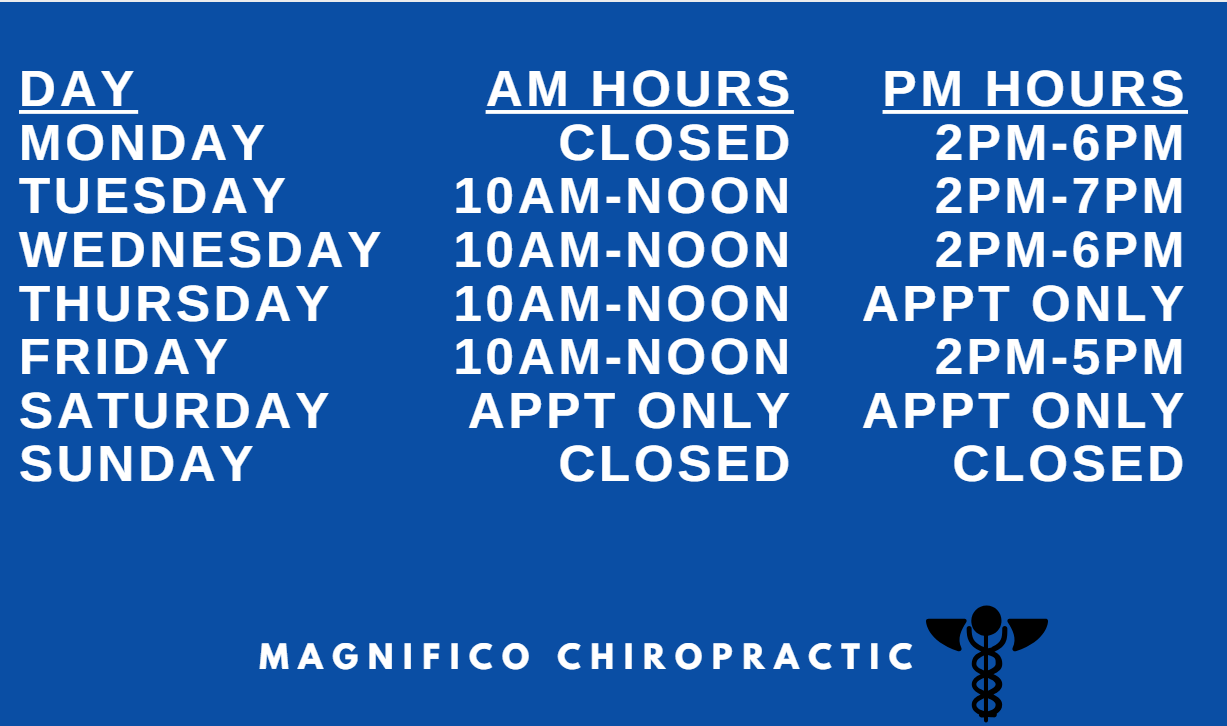
New Office Hours

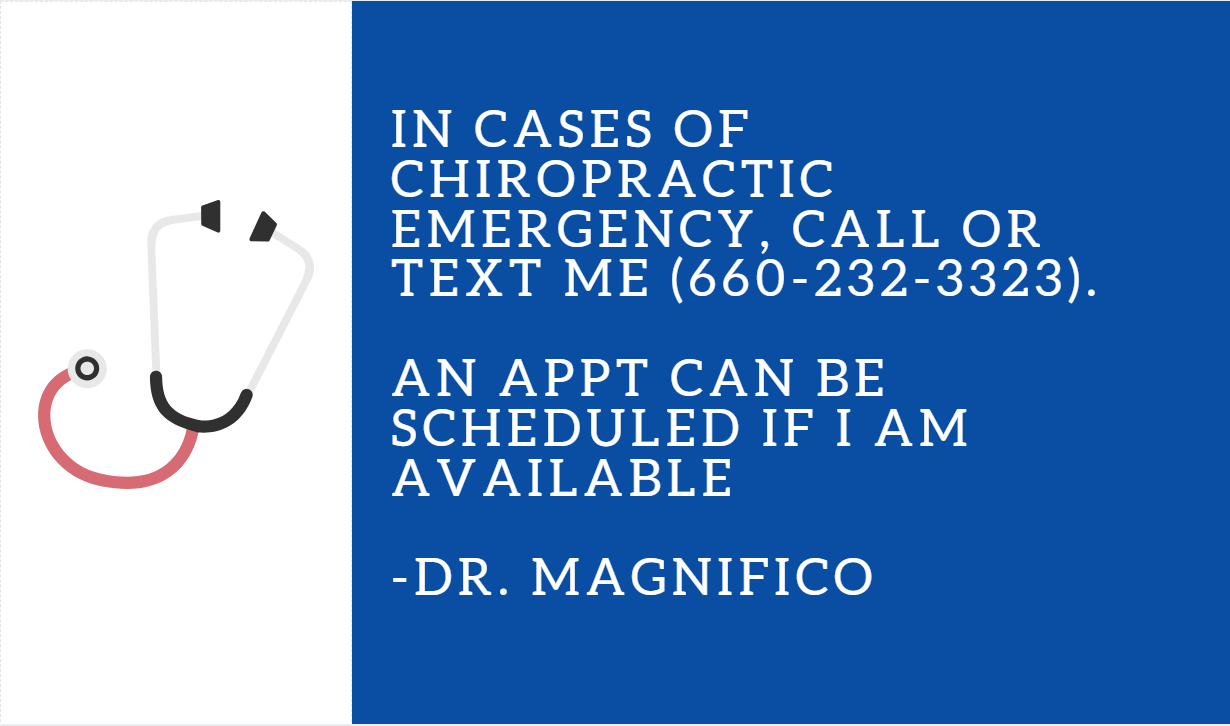
Hours blogEmergency blog

Posted in Uncategorized

How Effective is Manipulative Therapy for Treating Migraines?

A new trial evaluated the efficacy of chiropractic spinal manipulative therapy for the treatment of migraines, and found that “[m]igraine days were significantly reduced within all three groups…”

Read more from the European Journal of Neurology:

“Manual-therapy randomized controlled trials (RCTs) are difficult to perform because it’s challenging to conceal a placebo when patients are able to physically feel a treatment that’s being delivered. Now, though, researchers have successfully completed the first manual-therapy RCT with a documented successful blinding. The three-armed trial evaluated the efficacy of chiropractic spinal manipulative therapy (CSMT) in the treatment of migraine versus placebo (sham chiropractic) and control (usual drug treatment).

Migraine days were significantly reduced within all three groups from baseline to post-treatment; the effect continued in the CSMT and placebo groups at all follow-up time points, whereas the control group returned to baseline. The effect of CSMT was likely due to a placebo response.”

Posted in Uncategorized

Updated Clinical Practice Guideline Issued on Chiropractic Care for Low-Back Pain

From ACA Today

Updated Clinical Practice Guideline Issued on Chiropractic Care for Low-Back Pain.
 
Arlington, Va. – The Journal of Manipulative and Physiological Therapeutics (JMPT), the official scientific journal of the American Chiropractic Association (ACA), published an update to a previously issued evidence-based clinical practice guideline on chiropractic management of low-back pain (LBP). The update, which revised and combined three previous guidelines, supports that doctors of chiropractic (DCs) are well-suited to diagnose, treat, co-manage and manage the treatment of patients with low-back disorders.
Clinical practice guidelines require regular updating to be considered current. To that end, a formal systematic review of LBP literature was conducted for the current update using the Delphi technique and included 37 panelists, of whom 89 percent had worked in private practice for an average of 27 years. Panelist consensus was reached after one round of revisions; the vast majority of recommendations remained unchanged. The previous Council on Chiropractic Guidelines and Practice Parameters guidelines were developed in 2008 and expanded twice over the intervening years.

The updated guideline provides recommendations throughout the continuum of care from acute to chronic and offers the chiropractic profession an up-to-date evidence- and clinical practice experience-informed resource outlining best practice approaches for the treatment of patients with LBP. Key recommendations are as follows:

  • Routine imaging or other diagnostic tests are not recommended for patients with non-specific LBP. Imaging is indicated in the presence of severe and/or progressive neurologic deficits or if the history or physical exam causes suspicion of serious underlying pathology.
  • The hierarchy of clinical methods used should generally correspond to the existing level of evidence (i.e., use treatments that are well-supported by evidence first, before moving on to other treatments that are less supported by evidence but that have been shown to be effective through practitioner experience).
  • Active care (exercise) clinical strategies can aid in functional recovery from a re-conditioning perspective and also to improve “locus of control” (promoting patient self-reliance) from a psychosocial perspective.
  • Informed consent should be obtained from the patient. The diagnosis, exam and any proposed procedures should be explained clearly. Any material risks associated with the proposed treatment should be reviewed (the definition of what is a “material risk” can vary depending on the state), as well as risks associated with other treatment options and the risk of doing nothing.
  • Evidence reviewed does not generally support the use of therapeutic modalities (ultrasound, electrical stimulation, etc.) in isolation; however their use as part of a passive to active care multimodal approach to LBP management may be warranted based on clinical judgment and patient preferences.
“The updated LBP guideline continues to vigorously promote the use of published research evidence along with clinical practice experience to establish recommendations on clinical methods designed to improve patient care and outcomes,” said ACA President Anthony Hamm, DC, FACO. “It is expected that through constant improvement in clinical methods, chiropractic physicians can elevate the profession and influence greater acceptance of chiropractic in integrated health care delivery systems so that we can better serve the American public.”
Information for patients about LBP is available here.
Read the full study in the JMPT.
ATTRIBUTION TO THE JOURNAL OF MANIPULATIVE AND PHYSIOLOGICAL THERAPEUTICS IS REQUESTED IN ALL NEWS COVERAGE.

# # #

About the Journal of Manipulative and Physiological Therapeutics (JMPT) 
JMPT is dedicated to the advancement of chiropractic health care. It provides the latest information on current developments in therapeutics, as well as reviews of clinically oriented research and practical information for use in clinical settings. The Journal’s editorial board includes some of the world’s leading clinical low-back and spine researchers from medicine, osteopathy, chiropractic and post-secondary education. The Journal of Manipulative and Physiological Therapeutics www.jmptonline.org is the official scientific journal of the American Chiropractic Association.
About the American Chiropractic Association
The American Chiropractic Association (ACA), based in Arlington, Va., is the largest professional association in the United States representing doctors of chiropractic. ACA promotes the highest standards of ethics and patient care, contributing to the health and well-being of millions of chiropractic patients. Visit us at www.acatoday.org.
Posted in Uncategorized

Measureable changes in the neuro-endocrinal mechanism following spinal manipulation

The autonomic nervous system and the hypothalamic-pituitary-adrenal axis have been shown to be dysfunctional in a number of chronic pain disorders. Spinal manipulation is a therapeutic technique used by manual therapists, which may have widespread neuro-physiological effects. The autonomic nervous system has been implicated to modulate these effects. A theory is proposed that spinal manipulation has the potential to be used as a tool in restoring the autonomic nervous system balance. Further, it is also hypothesised that through its anatomical and physiological connections, the autonomic nervous system activity following a thoracic spinal manipulation may have an effect on the hypothalamic-pituitary-adrenal axis and therefore pain and healing via modulation of endocrine and physiological processes. To substantiate our hypothesis we provide evidence from manual therapy studies, basic science and animal studies. According to the proposed theory, there will be measurable changes in the neuro-endocrinal mechanisms following a thoracic spinal manipulation. This has far-reaching implications for manual therapy practice and research and in the integration of spinal manipulation in the treatment of a wide array of disorders.
Posted in Uncategorized

Chiropractic Care and the 21st Century

The founding of chiropractic as a healing art has almost taken on the proportions of legend or myth. According to Daniel David Palmer, the late founder of chiropractic, this combination of art and science originated in 1895. Palmer had encountered a janitor who had been deaf for 17 years, claiming that the deafness had started when something in his back popped out. Already a proponent of natural healing and the science connected with it, Palmer explained his theory of spinal alignment to the janitor and was allowed to do an adjustment. The man’s hearing was immediately restored and chiropractic was born. Two years later, the Palmer School of Chiropractic was founded, and Palmer’s son, Dr. B.J. Palmer, developed it into the prestigious college that is it today.

As chiropractic took off and became popular with Americans who experienced its healing effects, the American Medical Association and Big Pharma saw the growth of this non-surgical, non-pharmaceutical treatment as a threat and started a smear campaign, according to New York Times best-selling author Dr. Joseph Mercola, DO.

In fact, the anti-chiropractic smear campaign was much more severe than the AMA “merely” setting out to destroy the reputation of the chiropractic profession by calling them “quacks” and any number of other derogatory terms. In 1976, finally completely fed up with the deliberate maligning of his life’s work in chiropractic, Dr. Chester Wilk, DC, and four other licensed chiropractors filed suit against the AMA and several other medical organizations and later won their case. During arguments, the AMA et al. had been shown to manipulate insurers so that they would not pay for chiropractic treatment, disparage chiropractic colleges, prevent the government from learning about the effectiveness of chiropractic care, hide evidence of that same effectiveness, and take part in additional activities that would allow the AMA to maintain its health-care monopoly.

Enter Dr. Jay Holder, DC. Not long after the 7th United States Circuit Court of Appeals upheld the Wilk’s ruling in favor of chiropractic in 1987, Dr. Holder, a Miami Beach-based chiropractor, enlisted the aid of researcher and biostatistician, Dr. Robert Duncan, PhD, at the University of Miami Medical School. Dr. Duncan helped set up a scientific study on the effectiveness of chiropractic in terms of a patient’s overall sense of well-being, and in particular, how it would affect those dealing with addiction. But before such a study could be implemented, it would be necessary for the premise to be in a format that could be measured and reproduced. In other words, how would one account for the difference in level of pressure or technique used by chiropractors of varying sizes and strength?

Dr. Holder came up with a solution. Over a period of years, Holder both created and patented a toggle recoil instrument, called the Integrator™, and the Torque Release Technique™, which combines the best of traditional chiropractic with quantum physics. The emphasis is not linear, as in traditional chiropractic, meaning that using force to adjust the entire spine at once is abandoned in order to adjust just the primary subluxation, or misalignment. This then allows the body to adjust secondary and tertiary subluxations itself, which tends to be a much more gentle process. As Holder himself says, this substantial difference makes the TRT™ “the first technique of chiropractic’s second century.”

Because of the effectiveness of the Torque Release Technique™, the high-tech diagnostics used and the number of scientific studies backing these claims of efficacy, the TRT™ has taken the chiropractic world by storm. The Holder Research Institute in Miami Beach offers two-day trainings with a half-day refresher course to practicing chiropractors. Today, there are close to 30,000 licensed chiropractors working in the United States alone, with 5-6,000 of them officially trained in the Torque Release Technique™. What’s more, in the last few years, the TRT™ has been offered as part of the curriculum at chiropractic colleges around the country, which is one of the main reasons that the use of the TRT™ has exploded onto the American health care scene.

Source: http://www.blogforiowa.com/2015/09/29/chiropractic-explodes-into-the-21st-century

Posted in Uncategorized

Carpal Tunnel and Migraine Link

DALLAS – April 27, 2015 – Plastic surgeons at UT Southwestern Medical Center have demonstrated for the first time an association between migraines and carpal tunnel syndrome, with migraines more than twice as prevalent in those with carpal tunnel syndrome as those without, according to the study.

Researchers found that 34 percent of patients with carpal tunnel syndrome also reported migraines, compared to 16 percent of patients reporting migraines without carpal tunnel syndrome. Researchers also found the reverse: 8 percent of patients with migraines reported having carpal tunnel syndrome, compared to 3 percent of those with migraines but no carpal tunnel syndrome.

Read more!

Posted in Uncategorized

Chiropractic FAQ’s

What conditions do chiropractors treat?
Doctors of Chiropractic (DCs) care for patients of all ages, with a variety of health conditions.  DCs are especially well known for their expertise in caring for patients with back pain, neck pain and headaches…particularly with their highly skilled  manipulations or chiropractic adjustments. They also care for patients with a wide range of injuries and disorders of the musculoskeletal system, involving the muscles, ligaments and joints.  These painful conditions often involve or impact the nervous system, which can cause referred pain and dysfunction distant to the region of injury.  The benefits of chiropractic care extend to general health issues, as well, since our body structure affects our overall function. DCs also counsel patients on diet, nutrition, exercise, healthy habits, and occupational and lifestyle modification.

How do I select a doctor of chiropractic?
One of the best ways to select a doctor of chiropractic (DC) is by getting a referral from a friend, family member, colleague, or another health care provider. You can also locate a DC near you by using the American Chiropractic Association’s Find a Doctor search tool, www.acatoday.org/FindaDoc.

Does chiropractic treatment require a referral from an MD?
A referral is usually not needed to see a doctor of chiropractic (DC); however, your health plan may have specific referral requirements. You may want to contact your employer’s human resources department—or the insurance plan directly—to find out if there are any referral requirements. Most plans allow you to just call and schedule an appointment with a DC.

Is chiropractic treatment safe?
Chiropractic is widely recognized as one of the safest drug-free, non-invasive therapies available for the treatment of neuromusculoskeletal complaints. Although chiropractic has an excellent safety record, no health treatment is completely free of potential adverse effects. The risks associated with chiropractic, however, are very small. Many patients feel immediate relief following chiropractic treatment, but some may experience mild soreness, stiffness or aching, just as they do after some forms of exercise. Current research shows that minor discomfort or soreness following spinal manipulation typically fades within 24 hours.

Neck pain and some types of headaches are treated through precise cervical manipulation. Cervical manipulation, often called a neck adjustment, works to improve joint mobility in the neck, restoring range of motion and reducing muscle spasm, which helps relieve pressure and tension. Neck manipulation, when performed by a skilled and well-educated professional such as a doctor of chiropractic, is a remarkably safe procedure.

Some reports have associated upper high-velocity neck manipulation with a certain rare kind of stroke, or vertebral artery dissection. However, evidence suggests that this type of arterial injury often takes place spontaneously in patients who have pre-existing arterial disease. These dissections have been associated with everyday activities such as turning the head while driving, swimming, or having a shampoo in a hair salon. Patients with this condition may experience neck pain and headache that leads them to seek professional care—often at the office of a doctor of chiropractic or family physician—but that care is not the cause of the injury. The best evidence indicates that the incidence of artery injuries associated with high-velocity upper neck manipulation is extremely rare—about one to three cases in 100,000 patients who get treated with a course of care. This is similar to the incidence of this type of stroke among the general population.

If you are visiting your doctor of chiropractic with upper-neck pain or headache, be very specific about your symptoms. This will help your doctor of chiropractic offer the safest and most effective treatment, even if it involves referral to another health care provider.

When discussing the risks of any health care procedure, it is important to look at that risk in comparison to other treatments available for the same condition.  In this regard, the risks of serious complications from spinal manipulation for conditions such as neck pain and headache compare very favorably with even the most conservative care options.  For example, the risks associated with some of the most common treatments for musculoskeletal pain—over-the-counter or prescription nonsteroidal anti-inflammatory drugs (NSAIDS) and prescription painkillers—are significantly greater than those of chiropractic manipulation.

According to the American Journal of Gastroenterology, people taking NSAIDS are three times more likely than those who do not to develop serious adverse gastrointestinal problems such as hemorrhage (bleeding) and perforation. That risk rises to more than five times among people age 60 and older.

Moreover, the number of prescriptions for powerful drugs such as oxycodone and hydrocodone have tripled in the past 12 years. The Centers for Disease Control and Prevention (CDC) has reported that abuse of these commonly prescribed painkillers are among the leading causes of accidental death in the United States. Overdoses of opioid painkillers are responsible for some 15,000 deaths per year; that’s more than the number of deaths from cocaine and heroin combined.

Doctors of chiropractic are well trained professionals who provide patients with safe, effective care for a variety of common conditions. Their extensive education has prepared them to identify patients who have special risk factors and to get those patients the most appropriate care, even if that requires referral to a medical specialist.

Is chiropractic treatment appropriate for children?
Yes, children can benefit from chiropractic care. Children are very physically active and experience many types of falls and blows from activities of daily living as well as from participating in sports. Injuries such as these may cause many symptoms including back and neck pain, stiffness, soreness or discomfort. Chiropractic care is always adapted to the individual patient. It is a highly skilled treatment, and in the case of children, very gentle.

Are chiropractors allowed to practice in hospitals or use medical outpatient facilities?
Chiropractors are being recognized to admit and treat patients in hospitals and to use outpatient clinical facilities (such as labs, x-rays, etc.) for their non-hospitalized patients.  Hospital privileges were first granted in 1983.

Do insurance plans cover chiropractic?
Yes. Chiropractic care is included in most health insurance plans, including major medical plans, workers’ compensation, Medicare, some Medicaid plans, and Blue Cross Blue Shield plans for federal employees, among others. Chiropractic care is also available to active-duty members of the armed forces at more than 60 military bases and is available to veterans at 36 major veterans medical facilities.

What type of education and training do chiropractors have?
Doctors of chiropracticare educated as primary-contact health care providers, with an emphasis on diagnosis and treatment of conditions related to the musculoskeletal system (the muscles, ligaments and joints of the spine and extremities) and the nerves that supply them. Educational requirements for doctors of chiropractic are among the most stringent of any of the health care professions.

The typical applicant for chiropractic college has already acquired nearly four years of pre-medical undergraduate college education, including courses in biology, inorganic and organic chemistry, physics, psychology and related lab work. Once accepted into an accredited chiropractic college, the requirements become even more demanding — four to five academic years of professional study are the standard. Doctors of chiropractic are educated in orthopedics, neurology, physiology, human anatomy, clinical diagnosis including laboratory procedures, diagnostic imaging, exercise, nutrition rehabilitation and more.

Because chiropractic care includes highly skilled manipulation/adjusting techniques, a significant portion of time is spent in clinical technique training to master these important manipulative procedures.

In total, the chiropractic college curriculum includes a minimum of 4,200 hours of classroom, laboratory and clinical experience. The course of study is approved by an accrediting agency that is fully recognized by the U.S. Department of Education.

How is a chiropractic adjustment performed?
Chiropractic adjustment or manipulation is a manual procedure that utilizes the highly refined skills developed during the doctor of chiropractic’s intensive years of chiropractic education. The chiropractic physician typically uses his or her hands–or an instrument–to manipulate the joints of the body, particularly the spine, in order to restore or enhance joint function. This often helps resolve joint inflammation and reduces the patient’s pain. Chiropractic manipulation is a highly controlled procedure that rarely causes discomfort. The chiropractor adapts the procedure to meet the specific needs of each patient. Patients often note positive changes in their symptoms immediately following treatment.

Is chiropractic treatment ongoing?
The hands-on nature of the chiropractic treatment is essentially what requires patients to visit the chiropractor a number of times. To be treated by a chiropractor, a patient needs to be in his or her office. In contrast, a course of treatment from medical doctors often involves a pre-established plan that is conducted at home (i.e. taking a course of antibiotics once a day for a couple of weeks). A chiropractor may provide acute, chronic, and/or preventive care thus making a certain number of visits sometimes necessary.  Your doctor of chiropractic should tell you the extent of treatment recommended and how long you can expect it to last.

Why is there a popping sound when a joint is adjusted?
Adjustment (or manipulation) of a joint may result in the release of a gas bubble between the joints, which makes a popping sound. The same thing occurs when you “crack” your knuckles. The noise is caused by the change of pressure within the joint, which results in gas bubbles being released. There is usually minimal, if any, discomfort involved.

Posted in Uncategorized